
Globally, South Africa is reported to have the third-highest level of marine species endemism, meaning that the country has a critical role to play in international marine species conservation. Several marine species are faring better in the country than elsewhere in the region. However, marine species have among the highest data deficiency across all realms signalling the need to build foundational knowledge and capacity to support assessment for informed management and decision-making. Of the 495 species assessed using the IUCN Red List of Threatened Species; sharks, rays and chimaeras; corals; seabirds and seabreams are among the most threatened species groups.
36%
of 495 taxa assessed are
Threatened
of 495 taxa assessed are
Threatened
32%
of 65 stocks
Depleted or Heavily Depleted
of 65 stocks
Depleted or Heavily Depleted
7%
of 495 taxa assessed are
Data Deficient
of 495 taxa assessed are
Data Deficient
25%
of 65 stocks
Unknown
of 65 stocks
Unknown
Threat status and trends (the Red List Index)
A total of 495 marine species have been assessed using the IUCN Red List of Threatened Species criteria and are included in the NBA, drawing from a combination of national, regional and global assessments. Of these, approximately 36% of taxa are threatened in 2025, while 18% of 376 assessed species were threatened in 2018. This difference is due to the inclusion of additional species (including all sharks, rays and chimaeras, additional corals and selected marine invertebrates), many of which are threatened. However, the high proportion of threatened taxa is not fully representative of the extinction risks at the realm level because there has been a focus on assessing economically important species and groups known to be at risk (such as corals, sharks, rays and chimaeras, rock lobsters and abalone). The lack of comprehensively assessed marine taxonomic groups leads to an inflated bias of threat results.
| Taxonomic grouping | Critically Endangered | Endangered | Vulnerable | Near Threatened | Data Deficient | Least Concern | Total | |
|---|---|---|---|---|---|---|---|---|
| Birds | All indigenous | 2 | 14 | 13 | 14 | 0 | 31 | 74 |
| Endemic | 1 | 2 | 1 | 2 | 0 | 1 | 7 | |
| Coastal Invertebrates | All indigenous | 0 | 4 | 0 | 3 | 0 | 13 | 20 |
| Endemic | 0 | 1 | 0 | 1 | 0 | 4 | 6 | |
| Corals | All indigenous | 0 | 29 | 7 | 1 | 2 | 58 | 97 |
| Endemic | 0 | 0 | 0 | 0 | 0 | 0 | 0 | |
| Mammals | All indigenous | 1 | 3 | 4 | 1 | 13 | 28 | 50 |
| Endemic | 0 | 0 | 0 | 0 | 0 | 0 | 0 | |
| Marine fishes | All indigenous | 1 | 1 | 1 | 0 | 1 | 0 | 4 |
| Endemic | 0 | 0 | 0 | 0 | 0 | 0 | 0 | |
| Marine invertebrates | All indigenous | 0 | 2 | 1 | 0 | 0 | 8 | 11 |
| Endemic | 0 | 2 | 0 | 0 | 0 | 0 | 2 | |
| Reptiles | All indigenous | 2 | 0 | 1 | 1 | 0 | 2 | 6 |
| Endemic | 0 | 0 | 0 | 0 | 0 | 0 | 0 | |
| Sharks (incl. rays & chimaeras) | All indigenous | 12 | 35 | 34 | 20 | 18 | 72 | 191 |
| Endemic | 0 | 2 | 4 | 0 | 2 | 5 | 13 | |
| Sparids | All indigenous | 2 | 4 | 4 | 2 | 1 | 29 | 42 |
| Endemic | 2 | 3 | 0 | 1 | 0 | 9 | 15 |
In the marine realm, capacity shortfalls, gaps in taxonomic knowledge, and the lack of information on species distribution, life histories and long-term population trends have led to limited assessments with many groups not evaluated for their risk of extinction. Consequently, ~7% of species were assessed as Data Deficient, the highest among the four realms. Limited assessment efforts signal the need to address knowledge gaps and increase capacity for foundational research on marine species (including taxonomy and strengthened distribution data) and comprehensive IUCN Red List assessments for entire taxonomic groups.
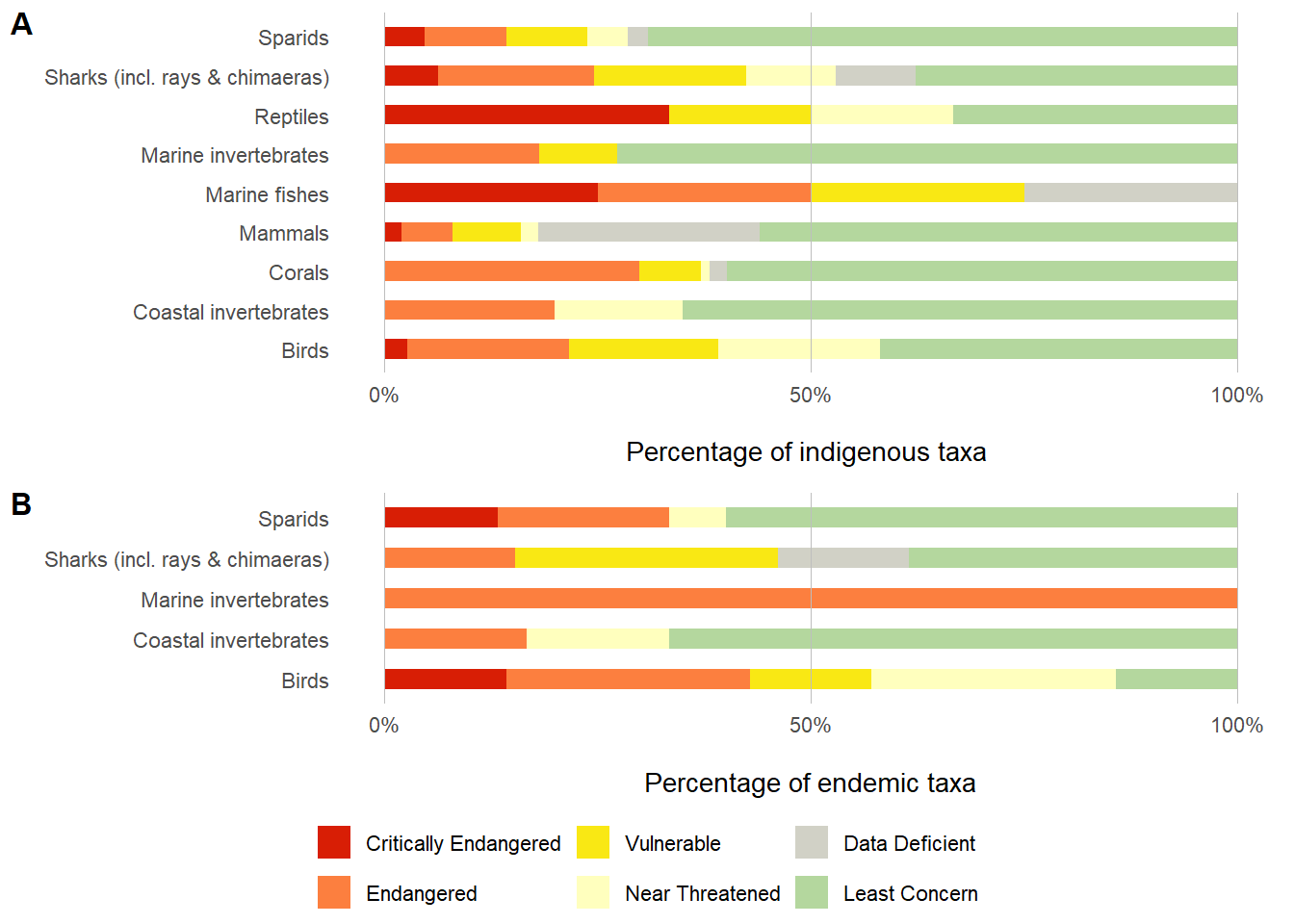
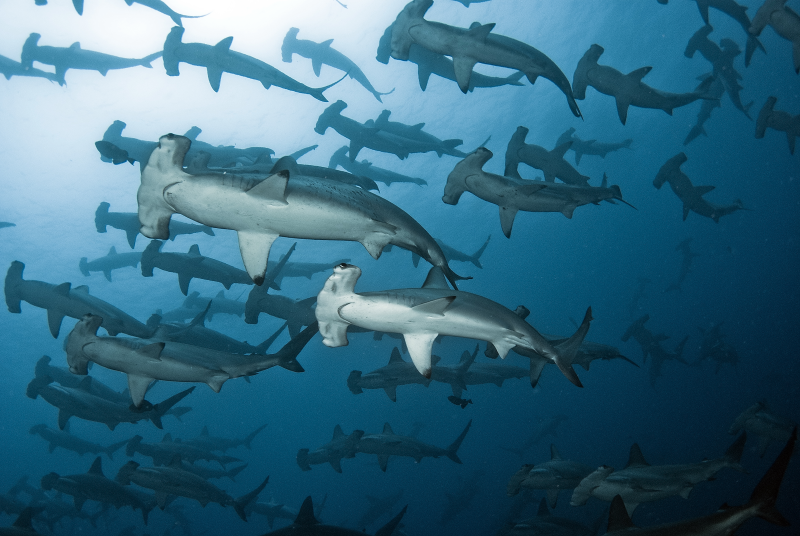
A comprehensive assessment of cartilaginous fishes (sharks, rays and chimaeras) was included in NBA 2025 drawing from global and national assessments, with this group emerging as one of the most threatened groups across all realms (more than 40% threatened; Figure 1A). Many cartilaginous fishes are long-lived, with slow growth and low reproductive output, and are thus inherently vulnerable to fishing. Many cartilaginous species are also wide-ranging and much of their declines can be attributed to poor fisheries management in other regions. However, more than a third of South Africa’s endemic sharks, rays and chimaeras are threatened (Figure 1B), indicating that the country has an important role in reversing declines of these species. Endemic species at highest risk of extinction include the happy Eddie (Haploblepharus edwardsi) and twineye skate (Raja ocellifera), both assessed as Endangered. Globally and in South Africa, the main threats to sharks are unsustainable fishing as target and bycatch species1,2. In South Africa, cartilaginous fishes are caught as target and bycatch species in industrial fisheries, targeted catch in recreational fisheries, and in bather protection shark nets. Read more on the shark page.
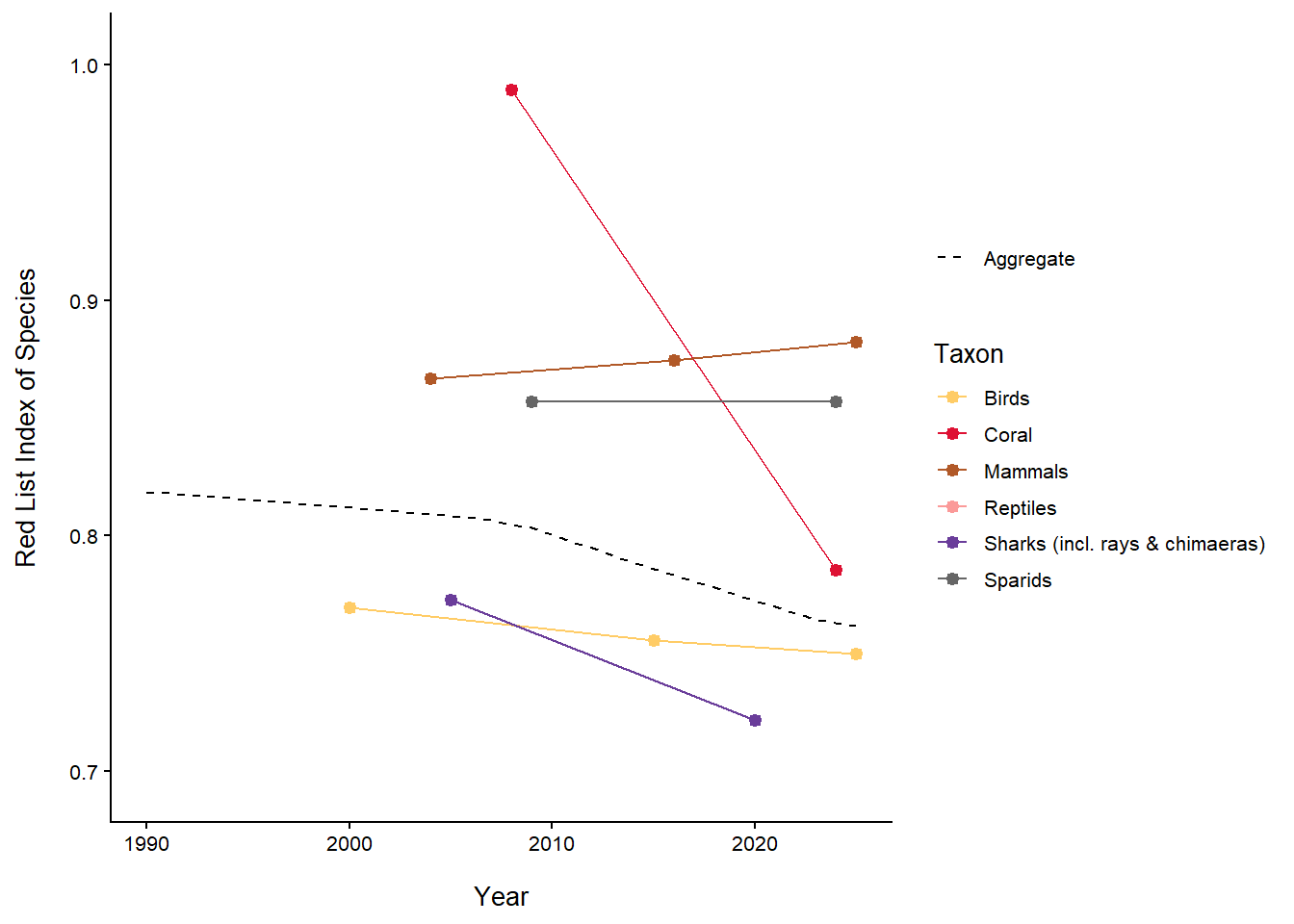
The Red List Index (RLI)3 for top predators such as sharks, shows deteriorating threat status over time (Figure 2). As apex and meso-predators, sharks perform a range of essential ecological functions in marine food webs, including controlling the populations of their prey, maintaining diversity at lower trophic levels (that include commercially fished species), and maintaining functional coastal and marine ecosystems4. Loss of top predators, therefore, has potential knock-on effects on the livelihoods of fisheries-dependent communities and food security.
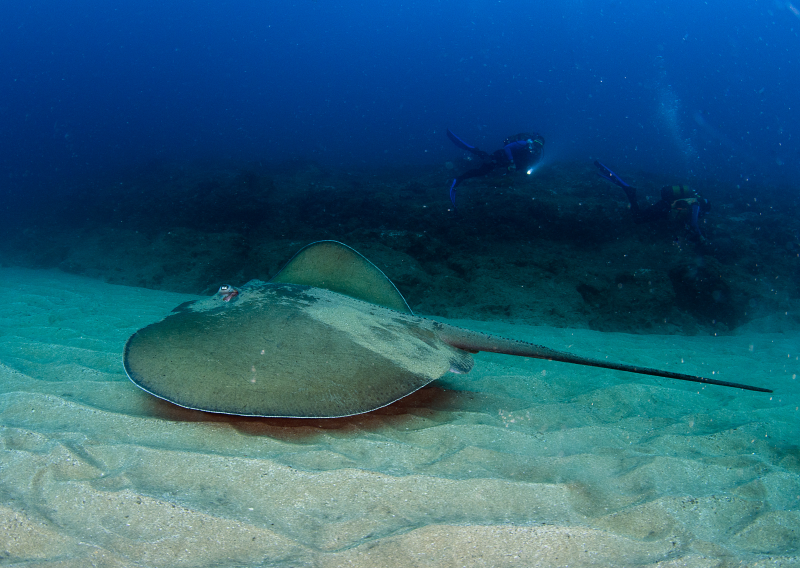
The decline in shark populations is a global trend, where the main threats to sharks are fisheries (as both target catch and bycatch), habitat loss and degradation, and climate change2,5,6. As most of South Africa’s 191 shark species have ranges that extend well beyond South African waters, some of the decline in the RLI for South Africa’s sharks reflects fishing pressure and other threats beyond South Africa’s jurisdiction. When national adjustments in threat status are taken into account, the South African RLI is marginally higher and the declining trend is marginally less steep than the global RLI for the same set of species. Nevertheless, 6 of South Africa’s 13 endemic sharks are threatened with global extinction, with their future fully dependent on conservation and fisheries management actions in South Africa. Read more on the shark page.
A total of 10 (24%) of South Africa’s 42 seabreams (sparids) are at risk of extinction with two Critically Endangered, four Endangered and four Vulnerable species Figure 1A. The dageraad (Chrysoblephus cristiceps) and red steenbras (Petrus rupestris) are Critically Endangered7,8, with Endangered taxa including seventy-four (Polysteganus undulosus)9, red stumpnose (Chrysoblephus gibbiceps), West Coast and white steenbras (Lithognathus aureti and L. lithognathus, respectively).
Seabream trends remain relatively stable (Figure 2) with some species uplisted and others downlisted. Since the previous assessments in 2009, three seabreams have improved in terms of threat status including the seventy-four (Polysteganus undulosus), from Critically Endangered to Endangered, red roman (Chrysoblephus laticeps) from Near Threatened to Least Concern and carpenter (Argyrozona argyrozona) from Near Threatened to Least Concern. Effective fisheries management measures and marine protected areas (MPAs) have supported recovery of some of these linefish. Two taxa became more threatened, namely the red steenbras (Petrus rupestrus), from Endangered to Critically Endangered, and the West Coast steenbras (Lithognathus auretti), from Near Threatened to Endangered. Overfishing by recreational fisheries are a particular concern for these two species.
South African kob species (Argyrosomus genus) – including dusky, silver, squaretail, and West Coast dusky kob – are highly valued food fish targeted by recreational, commercial and small-scale fishers, and are also caught as trawl bycatch. Once abundant, the populations of dusky kob (Argyrosomus japonicus), silver kob (Argyrosomus inodorus) and squaretail kob (Argyrosomus thorpei) have collapsed, largely due to a long history of overexploitation and habitat degradation. Dusky kob has been nationally assessed as Critically Endangered, and the assessment is being finalised, whilst squaretail and silver kob have been assessed as Endangered and Vulnerable respectively10.
These sciaenids are inherently vulnerable to exploitation: they are large, relatively slow growing and late maturing, spawn in predictable aggregations, and their juveniles show varying degrees of dependence on estuaries and their critical ecosystem functions (such as food provision and refuge from predators). Their susceptibility to overfishing is worsened by habitat degradation from sedimentation, freshwater flow reduction, pollution, and agricultural runoff. Similar appearances of multiple species complicate identification by fishers in the field, challenging effective species-specific management. Current regulations are inadequate, particularly for the large recreational sector, while climate change and the declining quality and quantity of estuarine habitats pose additional threats (Box 1).
NoteBox 1. South Africa co-developed a conservation strategy to improve the threat and stock status of kobs10.
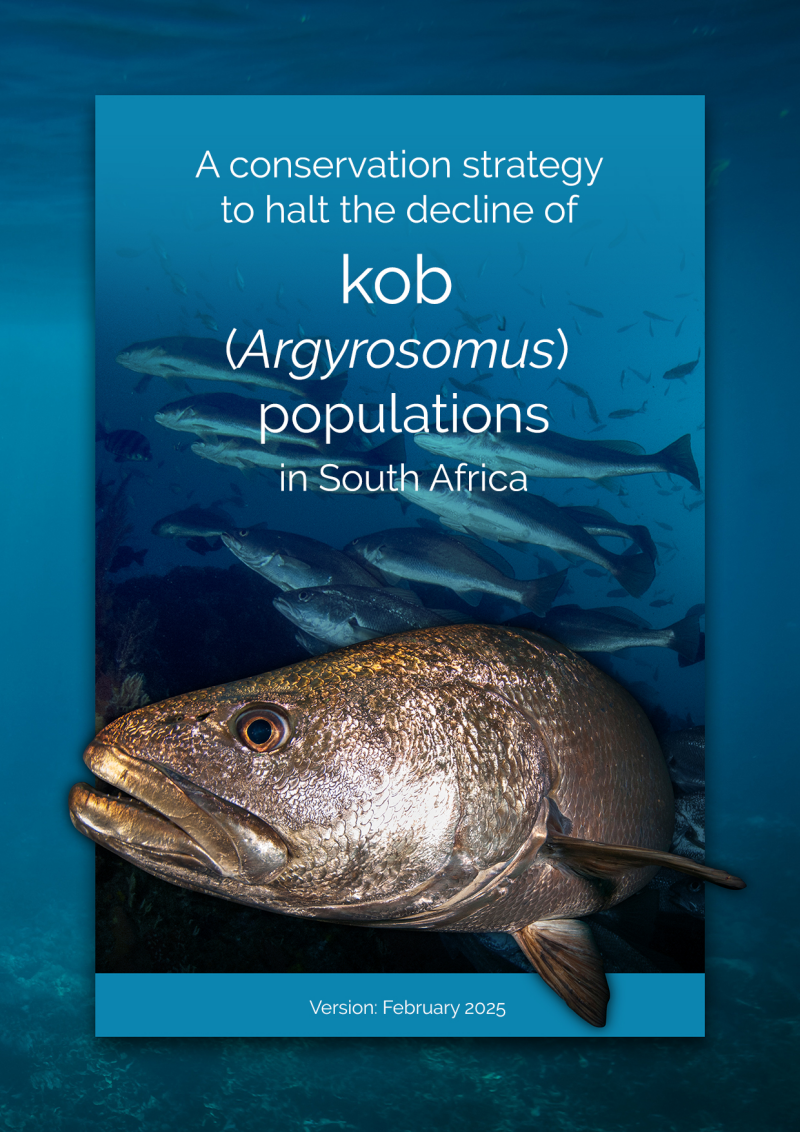 A collaborative conservation strategy involving government and non-government stakeholders established five key objectives: (1) reform current regulations with public engagement; (2) foster stewardship among users and managers; (3) enhance spatial protection of spawning sites, nurseries, and bycatch hotspots; (4) ensure adequate freshwater flow to estuaries; and (5) address critical research gaps. Each objective includes specific actions, responsible parties, priorities, and timelines.
The strategy invites researchers, fishers, conservationists, and decision-makers to contribute toward the long-term vision of recovering kob populations to sustainable levels in South Africa.
Four of South Africa’s six marine reptiles are threatened (Figure 1A), with three of five turtles at risk from fisheries bycatch or incidental mortalities. Leatherback turtles (Dermochelys coriacea) are regionally Critically Endangered and are a conservation priority. South Africa’s only sea snake is Least Concern.
Seabirds are the most threatened group of birds globally and in South Africa, where approximately 39% are threatened (Figure 1A). Albatrosses and petrels are the most threatened groups of seabirds, with incidental mortality linked to industrial trawl and longline fisheries posing a major threat (see subantarctic page). All seven seabird species endemic to the southern Benguela (including South Africa, Namibia and Angola) are threatened, with worsening trends for three species over the last decade. Regionally endemic seabird species include three species that predominantly feed on small pelagic fish (primarily anchovy and sardine), namely the African penguin (Spheniscus demersus; Endangered regionally but Critically Endangered globally), Cape cormorant (Phalacrocorax capensis; Endangered) and Cape gannet (Morus capensis; regionally Vulnerable but Endangered globally)11. The threat status of these seabirds is driven by competition with the purse-seine fishery12, predation13, and climate change. Crowned cormorant (Microcarbo coronatus; Near Threatened to Vulnerable) and Hartlaub’s gull (Chroicocephalus hartlaubii; Least Concern to Vulnerable) were uplisted due to a combination of pressures including human disturbance at breeding colonies, predation and diseases. Bank cormorants (Phalacrocorax neglectus; Endangered) are threatened by the decline of their major prey species, West Coast rock lobster (Box 4), and breeding failure, due to extreme weather patterns associated with climate change and human disturbance. Read more on the seabirds page.
Eight of 50 (16%) marine mammals are threatened (Figure 1A), with the Endangered Indian Ocean humpback dolphin (Sousa plumbea) being a key species of concern in South African waters (Box 2)14. A major pressure is shark control measures, with pollution, coastal development and shipping also contributing to the threat status of this species. Marine mammals show a positive trend (Figure 2) due to the improvement in status of a subantarctic species, the southern elephant seal (Mirounga leonina), which was recently downlisted from Near Threatened to Least Concern.
NoteBox 2. The most threatened marine mammal in South Africa, the Endangered Indian Ocean humpback dolphin, is at risk of extinction due to threats such as pollution, lethal shark control measures, shipping and coastal development.
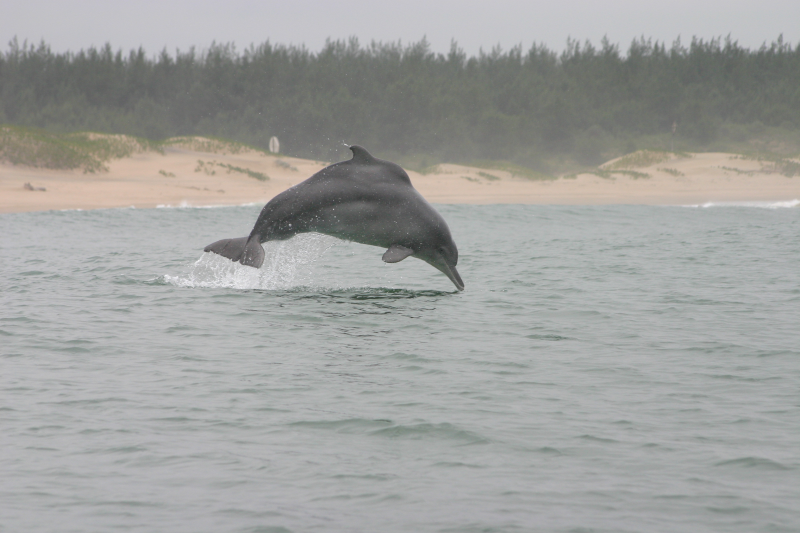
Recently reassessed, nationally and globally, the status of Indian Ocean humpback dolphin (Sousa plumbea) remains Endangered and the situation is dire, but not without hope. A major threat to humpback dolphins - incidental bycatch in the lethal shark control programme in KwaZulu-Natal has been reduced following changes in fishing gear. However, levels of chemical pollutants in humpback dolphins, including persistent organic pollutants (also known as ‘forever chemicals’) and heavy metals, continue to be the highest of any marine mammal in South Africa and amongst the highest globally15. Shipping and coastal development are other major threats. The cumulative effects of multiple stressors, which are difficult to pinpoint and mitigate, are impacting this small population that is currently estimated to be fewer than 500 individuals. The recent expansion of South Africa’s MPA coverage (e.g., uThukela Banks MPA) may have a help this species, but pressures need better management, both inside and outside protected areas. National efforts are underway through the South African Humpback Dolphin Consortium (SOUSA Consortium) in collaboration with the DFFE to develop a National Biodiversity Management Plan. This remains a top priority to ensure the long‐term survival of the species in South Africa. International collaboration is being strengthened with the recent formation of the Indian Ocean Humpback Dolphin Conservation Network (HuDoNET), linking scientists and conservationists across the species’ range.
Due to poor taxonomic knowledge and a paucity of occurrence records, most marine invertebrates cannot be assessed. However, shallow water reef-building corals were assessed globally and a sample of beach macrofauna and key invertebrate resources were assessed nationally. Globally, corals are now the second-most threatened species group after cycads. Of the 97 South African shallow reef-building corals assessed globally, 37% are threatened (Figure 1A) due to climate change (key message A1). Many of these are within the Acroporidae family. There are three Endangered Montipora coral species in South Africa. They are sensitive to thermal stress and are often the first taxa to show signs of bleaching, thus providing an early warning of climate stress in South Africa’s coral reef ecosystem types.
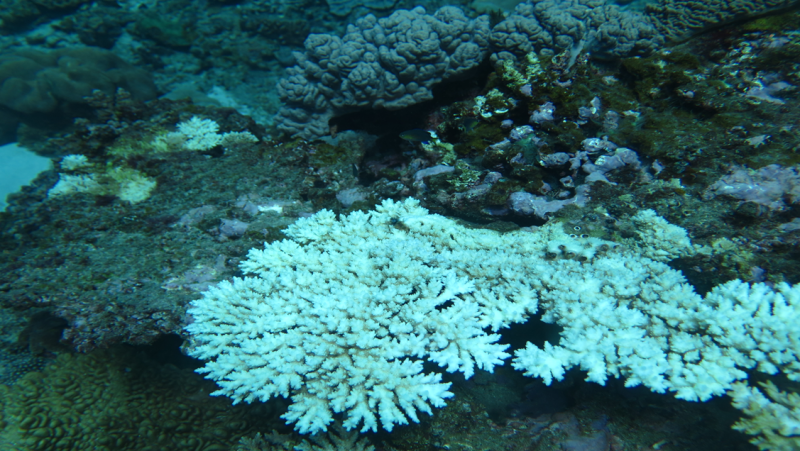
Corals show the steepest trend in worsening threat status (Figure 2), noting that these are global assessments with no national assessments conducted to date. South Africa’s shallow water reef building corals and stony corals, have experienced less coral bleaching and may be less threatened than elsewhere in the region and globally16,17.
NoteBox 3. South African abalone remains in crisis and was assessed as Endangered by the IUCN in 2021
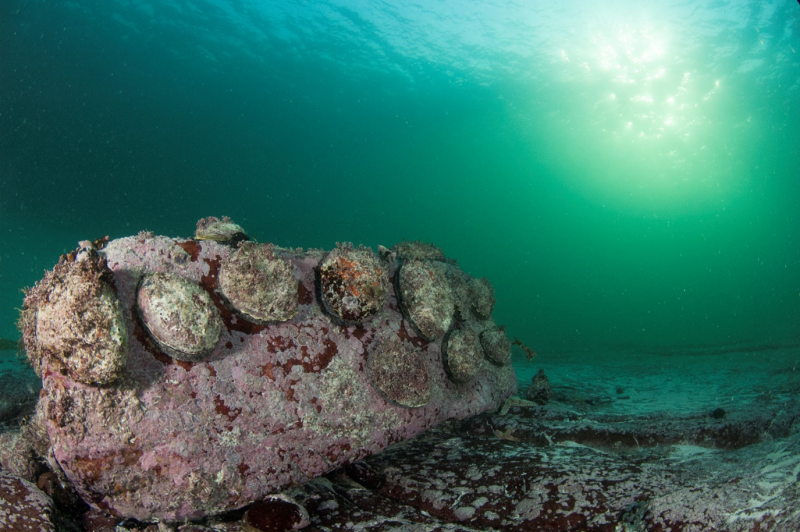
Haliotis midae, commonly known as perlemoen, was listed as Endangered on the IUCN Red List in 202118 due to the collapse of what was once a thriving commercial fishery that peaked at 2 800 tons in 1965. A total allowable catch for the fishery of only 12 tons was announced for the 2025/2026 fishing season. The legal commercial fishery, allocated quotas across seven zones in the Western Cape, has been systematically undermined and overwhelmed by industrial-scale illegal fishing operations. Organised criminal gangs, linked to international drug trafficking, have exploited this species at catastrophic levels, with illegal harvests estimated at over 2 000 tons annually, compared to disproportionately small legal quotas. Population surveys reveal widespread recruitment failure throughout all commercial zones, as illegal fishing targets predominantly immature individuals below the legal minimum size, preventing reproduction and causing population densities to fall below levels necessary for successful breeding. The IUCN assessment predicts a continued steep decline in spawning biomass through 2035, with recovery likely requiring a 59% reduction in illegal fishing harvest via robust enforcement measures.
Assessments from a small sample of utilised marine invertebrates in South Africa (10 spiny lobsters and abalone) found that three of the 11 resource species are threatened. South African abalone (Haliotis midae; Box 3) and West Coast rock lobster (Jasus lalandii; Box 4) are both Endangered, signalling the need to support recovery of these species. A strategy to develop marine species Red Listing in South Africa was developed in 2024 with a focus on marine invertebrates19.
NoteBox 4. West Coast rock lobster is nationally assessed as Endangered with its status driven largely by illegal fishing and exacerbated by environmental changes.
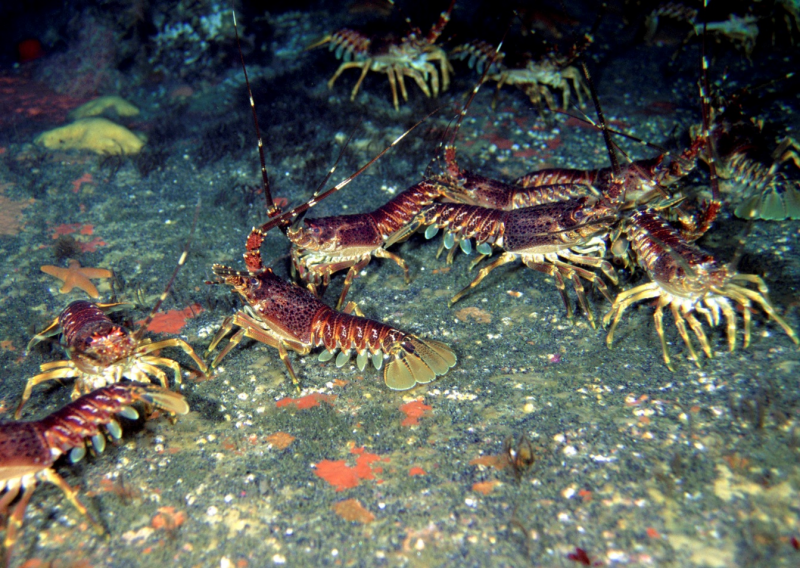
The West Coast rock lobster (Jasus lalandii), was globally assessed as Least Concern in 200920 as part of international efforts to assess crustaceans. However, a national assessment in 2025 found this species to be Endangered, primarily due to severe population decline, with exploitable biomass falling by 68% over the past three generations (45 years) and current stock levels at only 1.2% of pre-fished levels from 1910. The species faces overwhelming pressure from illegal fishing, which is estimated to remove more than twice as much biomass annually as legal fishing operations. Total allowable catch for the fishery was reduced by 91% from over 5 000 tonnes in the late 1970s to just 505 tons in 2024/2025, reflecting the resource’s dire condition. A small positive trend in the recent stock assessment has led to an increased allocation of 800 tons for the 2025/26 fishing season, however, the resource remains at significantly reduced levels and requires cautious management. Environmental stresses have compounded fishing pressures, including significant reductions in somatic growth rates since the 1990s, mass strandings caused by low oxygen events (with an estimated 2 000 tonnes lost in the 1997 event), and an eastward distribution shift that has disrupted traditional fishing areas. Climate change effects, including increased frequency of algal blooms and hypoxic conditions, continue to threaten the species through habitat degradation and physiological stress. The species’ biological characteristics make it particularly vulnerable to overexploitation, as it is slow-growing with a 15-year generation length and a complex life cycle that includes an extended larval stage. Despite decades of management measures including minimum size limits, seasonal restrictions, and operational management procedures, the combination of heavy illegal fishing pressure and environmental change has pushed this economically important species into crisis21.
The endemic South Coast rock lobster (Palinurus gilchristi) (Box 5) was assessed as Vulnerable in 2025 due to current overfishing, with historical illegal fishing also a key contributing factor. Abalone and South Coast rock lobster are endemic and their assessments are global, but the West Coast rock lobster assessment is a national assessment. Assessments for other rock lobster species occurring in South Africa are global assessments and all are considered to be Least Concern.
NoteBox 5. A national assessment of South Coast rock lobster revealed that it is Vulnerable due to overexploitation.
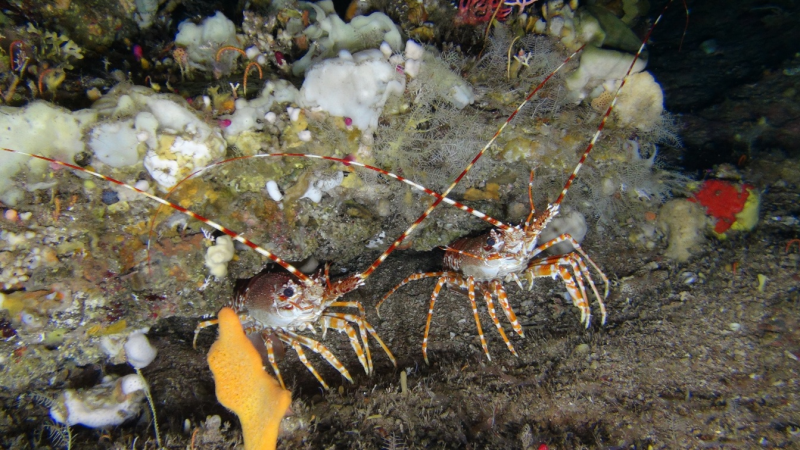
The South Coast rock lobster (Palinurus gilchristi), was nationally assessed as Vulnerable in 2025, using the IUCN Red List criteria. The status was primarily due to historical overexploitation that caused significant population declines over the past three generations (48 years). The species’ exploitable biomass has declined by 35% since the 1977/1978 fishing season, with current stock assessments indicating spawning biomass is at 41% of pre-fished levels. A major contributing factor was illegal over-harvesting by one company between 1987-2001, which significantly exceeded fishing quotas and caused concurrent decreases in both biomass and catch rates. The species’ biological characteristics make it particularly vulnerable to overexploitation, as it is long-lived (up to 30 years), slow-growing, and does not reach sexual maturity until about 10 years of age. While improved management measures, including reduced quotas and fishing effort controls, have led to some recovery in recent years, the cumulative decline over three generations still qualifies the species for Vulnerable status under IUCN Red List criteria A 2d.
Twenty South African sandy beach macrofaunal species were recently assessed22 and are the first beach invertebrates to be added to the IUCN Red List globally. Of these, four (20%) are listed as Endangered and a further three (15%) are Near Threatened. Species of concern include the pillbugs (Tylos granulatus; Endangered) and (Tylos capensis; Endangered), the beach ground beetle (Acanthoscelis ruficornis; Endangered) and the white mussel (Donax serra; Endangered) (Box 6, coast species). The pressures on beach macrofauna include mining on the West Coast, coastal development and associated artificial light at night, overfishing, and removal of washed-up kelp from the shore (see pressures page).
Pressures
Key pressures on marine species include fishing (industrial, recreational, illegal fisheries and lethal shark control measure), climate change and pollution (see marine pressures page). Coastal mining, freshwater flow reduction and estuarine degradation are also of concern22. Managing these pressures through increased investment in fisheries management, effective integrated coastal management, diversifying bather protection measures, promoting responsible environmental practices and spatial conservation measures will help to secure South Africa’s species for future generations.
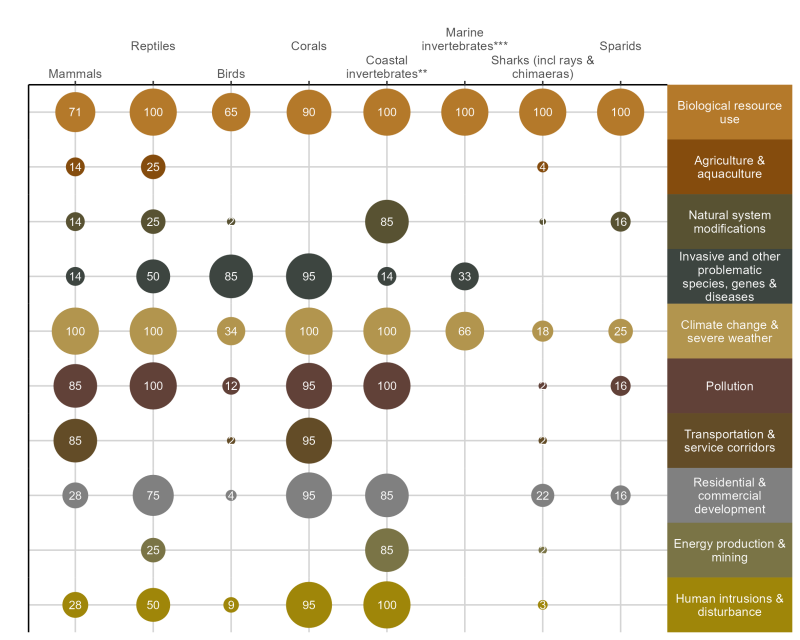
A meta-analysis of the key pressures impacting on taxa of conservation concern revealed that fishing remains the greatest pressure on marine species (Figure 3). Additional pressures of concern include pollution (plastics, underwater noise, waste water and effluent) and freshwater flow reduction, while key threats include climate change and marine alien and invasive species.
Species stock status
Stock assessments are conducted for fisheries species and constitute a rigorous approach to assessing species’ resource status. Stock status is distinct from IUCN Red List of Threatened Species status, which assesses extinction risk, although stock status and fisheries catch trends are often a key informant in IUCN Red List assessments.
Improvements in stock assessment methods, particularly for data-sparse species, have enabled more species to be assessed since the last NBA. A total of 65 stocks were assessed in South Africa in 2025. Of the assessed resources, 32% are depleted or heavily depleted and 43% are abundant or optimally exploited (Figure 4). The stock status of the remaining quarter of assessed marine resources remains unknown due to insufficient knowledge and data23 (Figure 4).
Effective science-based management has supported stock recovery of the carpenter seabream (Argyrozona argyrozona) and the roman seabream (Chrysoblephus laticeps) in the last two decades24. Important resources such as silver kob (Argyrosomus inodorus) remain depleted, despite signs of improvement from its previous heavily depleted state; whilst dusky kob (A. japonicus), dageraad (Chrysoblephus cristiceps) and red steenbras (Petrus rupestris) remain heavily depleted and are yet to show significant signs of stock recovery. Importantly, the seventy-four seabream (Polysteganus undulosus) is showing the first signals of recovery following a 27-year moratorium imposed on capture of this species (see sparid page). Recovery of many linefish species has been hampered by their life history characteristics, including slow growth, late maturity, hermaphroditism and residency, which make them vulnerable to exploitation. Whilst the linefish emergency declared in 2000 has supported stock recovery through a reduction in exploitation25, many linefish remain unassessed or depleted and are sought after in the open-access recreational fishery and the newly recognised small-scale fishery. Recent recommendations focus on more holistic ecosystem-based management for the line fishery26 that recognises the complexities of multiple sectors, species, and interacting socio-economics. Harmonised policy and fisheries governance (across commercial, recreational and small-scale sectors) can enable more equitable sharing of limited linefish resources could aid species recovery and maximise economic and social benefits26.
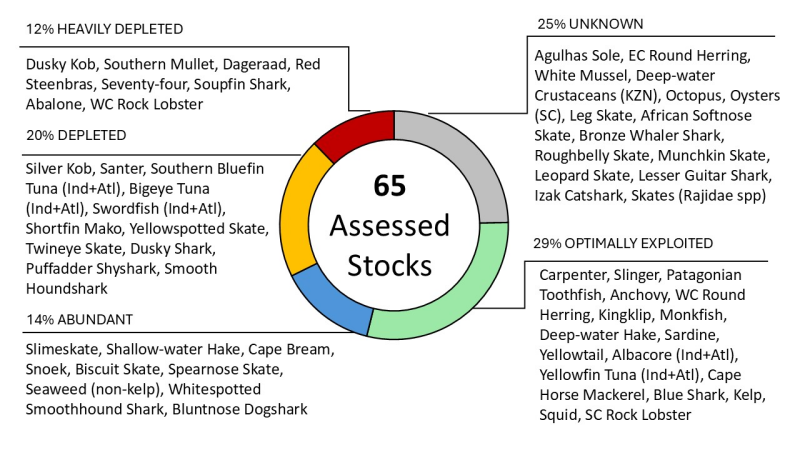
Large pelagic resources such as southern bluefin tuna (Thunnus maccoyii), bigeye tuna (Thunnus obesus) and swordfish (Xiphias gladius) are depleted. While very few sharks and rays have fisheries stock assessments, many of those assessed still have too little data to assign a stock status and have been listed as unknown. Where data are sufficient, several are in a poor state, with soupfin shark (Galeorhinus galeus) being heavily depleted, and shortfin mako shark (Isurus oxyrinchus), common smoothhound (Mustelus mustelus), dusky shark (Carcharhinus obscurus), happy Eddie (Haploblepharus edwardsii), yellowspotted skate (Leucoraja wallacei) and twineye skate (Raja ocellifera) assessed as depleted. As apex predators, sharks and rays play an important role in marine food webs. Currently, sharks and rays are targeted in the demersal shark longline fishery and the KwaZulu-Natal bather-protection shark nets, and are caught as bycatch in several fisheries, including the large pelagic longline fishery. Urgent effort is needed to halt the rapid decline in shark and ray resources. Management strategies such as the published National Plan of Action for Sharks II4 and the draft National Shark Biodiversity Plan27 make recommendations for improved fisheries and biodiversity elements of cartilaginous fishes management. Implementing these recommendations, particularly through a coordinated approach that provides for integrated shark and ray conservation, is needed to secure South Africa’s globally significant shark, ray and chimaera biodiversity (see shark page).
Traditional fishing resources such as snoek (Thyrsites atun) and commercially important resources such as shallow-water hake (Merluccius capensis) remain abundant with deep-water hake (Merluccius paradoxus) being optimally exploited.
The stock status of invertebrates such as white mussel (Donax serra) and octopus (Octopus vulgaris) were assessed as unknown, despite the use of these resources gaining popularity and white mussel being assessed as Endangered by the IUCN (Box 6). Abalone (Haliotis midae) and West Coast rock lobster (Jasus lalandii) remain heavily depleted due to illegal resource use.
To ensure fair and sustainable fisheries that support ocean life and human livelihoods, effective fisheries management plans should be implemented for all sectors, to manage the impacts on ecosystems, species, genes and people (see key message A5 and marine priority actions).
Approach
For the species of the marine realm, we report on species assessed using the IUCN Red List of Threatened Species in terms of extinction risk and the state of resource species for which stock status is assessed.
South Africa’s IUCN Red List assessment work is coordinated by SANBI’s Threatened Species Programme but is conducted by groups of species specialists. A total of 495 South African marine species have been assessed using the IUCN Red List criteria through a combination of national, regional and global assessments. Assessments of sharks, rays and chimaeras, sparids, and corals were undertaken by the IUCN species specialist groups, with many species assessed using global assessments. However, 33 species of cartilaginous fishes (sharks, rays and chimaeras) were assessed nationally, meaning that the IUCN criteria were applied to the portions of the populations that occur in South Africa’s water. Adjustments were undertaken for species where we had sufficient data to show that extinction risk trends were different from global trends.
The NBA 2025 assessment includes IUCN Red List assessments for kobs conducted as part of South Africa’s kob conservation strategy10, the first assessments for beach invertebrate fauna, assessments for selected marine invertebrate resource species and compilation of global coral assessments for shallow water coral species that occor in South Africa. Seabirds were regionally assessed by BirdLife South Africa, mammals were regionally assessed by the Endangered Wildlife Trust and reptiles were assessed using a combination of global and regional assessments.
The trend in species IUCN Red List status over time was measured using the globally recognised indicator, the IUCN Red List Index (RLI). The RLI is calculated for specific taxonomic groups based on changes in Red List categories over time. The RLI value ranges from 0 to 1; if the value is 1, all taxa are Least Concern and if the value is 0, all taxa are extinct. The slope of the line connecting different assessment periods indicates the rate of change in the average RLI. Sharks, rays and chimaeras, sparids, and corals were included in the RLI for the first time in 2025.
Information about resource stock status is drawn from the Department of Forestry, Fisheries and the Environment’s State of Fishery Resources reports23 to provide an overview of species stock status for fished taxa and examine main trends in marine resources over the assessment period.
Acknowledgements
We thank BirdLife South Africa who led the regional assessment of South African birds across realms and also coordinated the national adjustments for assessments on sharks, rays and chimaeras drawing from global efforts and national expertise. All contributors to the shark, rays and chimaeras assessments are acknowledged (see shark page). Scientists that contributed to sciaenid assessments and the kob conservation strategy are thanked, and the Agulhas Bank Connections Project funded through the African Coelacanth Ecosystem Project is acknowledged. The Endangered Wildlife Trust is thanked for their leadership of the assessment of South African mammals across realms. All the many individuals who gave up their time to participate in workshops, discussions, and author and review individual species assessments are sincerely thanked. We thank all the IUCN global assessment teams, including but not limited to: the IUCN SSC Coral Specialist Group, IUCN Cetacean Specialist Group and Cetacean Red List Authority, the IUCN SSC Snapper, Seabream and Grunt Specialist Group, the IUCN Shark Specialist Group and the IUCN SSC Grouper and Wrasse Specialist Group. We acknowledge the SAEON-led SeaMap project for supporting red listing of marine invertebrate resource species and the development of a strategy to increase Red List assessments of marine invertebrates in South Africa.
Recommended citation
Sink, K.J., Van der Bank, M.G., Raimondo, D.C., Van Der Colff, D., Boyd, C., Meissenheimer, K., Hendricks, S.E., Mclnnes, A., Mann, B.Q., Daly, R., Harris, L., Atkinson, L.J., Porter, S.N., Kerwath, S.E., Da Silva, C., Atkins, S., Farthing, M.W., Makhado, A.B., Seakamela, S.M., Kock, A.A., Vermeulen, E., Singh, S., Linardich, C., & Monyeki, M.S. 2026. Species status: Marine realm. National Biodiversity Assessment 2025. South African National Biodiversity Institute. http://nba.sanbi.org.za/.
References
1. Dulvy, N.K. et al. 2021. Overfishing drives over one-third of all sharks and rays toward a global extinction crisis. Current Biology 31: 4773–87.
2. Pollom, R.A. et al. 2024. Overfishing and climate change elevate extinction risk of endemic sharks and rays in the southwest Indian Ocean hotspot. PLoS One 19:
3. Butchart, S.H.M. et al. 2004. Measuring global trends in the status of biodiversity: Red List indices for birds. PLoS Biology 2: https://doi.org/10.1371/journal.pbio.0020383
4. DFFE. 2022. South africa’s second national plan of action for the conservation and management of sharks (NPOA-sharks II. 36.
5. Dulvy, N.K. et al. 2014. Extinction risk and conservation of the world’s sharks and rays. eLife 3: 1–34. https://doi.org/10.7554/eLife.00590.001
6. Dulvy, N.K. et al. 2024. Ecological erosion and expanding extinction risk of sharks and rays. Science 386: 1477.
7. Parker, D. et al. 2016. Dark times for dageraad chrysoblephus cristiceps: Evidence for stock collapse. African Journal of Marine Science 38: 341–349.
8. Kerwath, S.E. et al. 2019. Tracking the decline of the world’s largest seabream against policy adjustments. Marine Ecology Progress Series 610: 163–73.
9. Oosthuizen, C.J. et al. 2024. Genetic consequences in the southern african endemic seabream polysteganus undulosus (sparidae) after eight decades of overfishing. African Journal of Marine Science 46: 205–216,. https://doi.org/10.2989/1814232X.2024.2384454
10. Farthing, M. et al. 2025. A conservation strategy to halt the decline of kob (argyrosomus) populations in south africa. South African National Biodiversity Institute, Pretoria.
11. Lee, A.T.K. & D.A. Ehlers-Smith. 2025. Measuring protection effectiveness for terrestrial bird species in protected areas in South Africa. BirdLife South Africa, Johannesburg, South Africa.
12. Crawford, R.J. et al. 2022. Food limitation of seabirds in the benguela ecosystem and management of their prey base. Namibian Journal of Environment 6: 1–7.
13. Makhado, A.B. et al. 2013. An assessment of the impact of predation by cape fur seals arctocephalus pusillus pusillus on seabirds at dyer island, south africa. Ostrich 84: 191–8.
14. Plön, S. et al. 2021. Science alone won’t do it! South africa’s endangered humpback dolphins sousa plumbea face complex conservation challenges. Frontiers in Marine Science 8:
15. Plön, S. et al. 2023. Elements in muscle tissue of three dolphin species from the east coast of south africa. Marine pollution bulletin 188: 114707.
16. Porter, S.N. et al. 2021. The third global coral bleaching event on the marginal coral reefs of the southwestern indian ocean and factors that contribute to their resistance and resilience. Diversity.
17. Obura, D. et al. 2022. Vulnerability to collapse of coral reef ecosystems in the western indian ocean. Nature Sustainability 5: 104–13.
18. Peters, H. 2021. Haliotis midae. The IUCN Red List of Threatened Species 2021. 78771094 78772518. https://doi.org/10.2305/IUCN.UK.2021-3.RLTS.T78771094A78772518.en.
19. Subramoney, A.-C. et al. 2024. Planning for marine invertebrate species red listing in south africa. Cape Town, South Africa.
20. Cockcroft, A. et al. 2011. Jasus lalandii. The IUCN Red List of Threatened Species 170072 6725661. https://doi.org/10.2305/IUCN.UK.2011-1.RLTS.T170072A6725661.en.
21. Eggers, J.M. et al. 2024. The ecological and socioeconomic implications of future total allowable catch decisions and illegal fishing scenarios for south africa’s west coast rock lobster fishery. Marine Policy 170:
22. Harris, L.R. et al. 2025. Sandy beach ecosystem and species red listing highlight priorities for beach conservation and restoration. Estuarine, Coastal and Shelf Science p.109447: https://doi.org/10.1016/j.ecss.2025.109447
23. DFFE. 2025. Status of the South African marine fishery resources 2025. https://doi.org/10.15493/DFFE.10000008
24. Yemane, D. & S.E. Kerwath. 2023. Assessment of the status of selected linefish species based on trend analysis.
25. Haupt, M. et al. 2020. South African linefishes recovering and what makes them prone to overexploitation? African Journal of Marine Science 42: 361–73.
26. Potts, W.M. et al. 2020. Editorial overview: Recommendations for the promotion of a resilient linefishery in the anthropocene. African Journal of Marine Science 1;42(3):255-67:
27. DFFE. 2023. Fisheries and the environment. 2023. Draft South African Shark Biodiversity Management Plan.