
Freshwater fishes are among the most threatened species groups in South Africa, and the majority of the country’s endemic fish species are in ongoing decline. Key pressures include impacts on water quality and quantity, habitat destruction and the impacts of invasive species – pressures that often act synergistically and can be compounded by climate change.
In 2024, as groundwork for the Reverse the Red World Species Congress, members of the National Freshwater Fish Observation Group (including SANBI, SAIAB, CapeNature, Freshwater Research Centre) undertook a rapid assessment of South African freshwater fish species most urgently in need of recovery action, including species with recovery efforts already underway. The focus was on species assessed as Endangered or Critically Endangered, and those with a declining population trajectory.
Assessments were attempted for 26 described freshwater fish species, and 10 recognised genetically distinct lineages. Expert knowledge was used to identify priority conservation actions for each taxon, as well as the cost for implementing these actions. Assessments were completed for nine of the 26 described species and for five of the 10 genetic lineages; however, experts noted low confidence for several of these assessments. Furthermore, 12 of the taxa were not assessed due to insufficient expert knowledge.
Of the assessed taxa: all were considered in need of management actions and/or associated research; 11 were identified as in need of ex situ breeding programmes; 10 taxa were expected to benefit from new stewardship sites; and all 14 were considered in need of further research to identify the most suitable recovery actions. Investment in freshwater fish recovery efforts over the past 10 years was estimated at R18 million – a figure that would need to be increased nearly tenfold (to at least R168 million) to meet the recovery needs of freshwater fish species in South Africa over the next 5-10 years.
Summary of key recovery efforts for South African freshwater fish over the past 5 years
Despite the large knowledge gaps and investment required to recover these species, there are a growing number of freshwater fish recovery efforts underway, some of which have made measurable progress towards reviving some of the country’s most imperilled freshwater fish species. This section summarises key recovery efforts focussing on threatened South African freshwater fish taxa over the past 5 years.
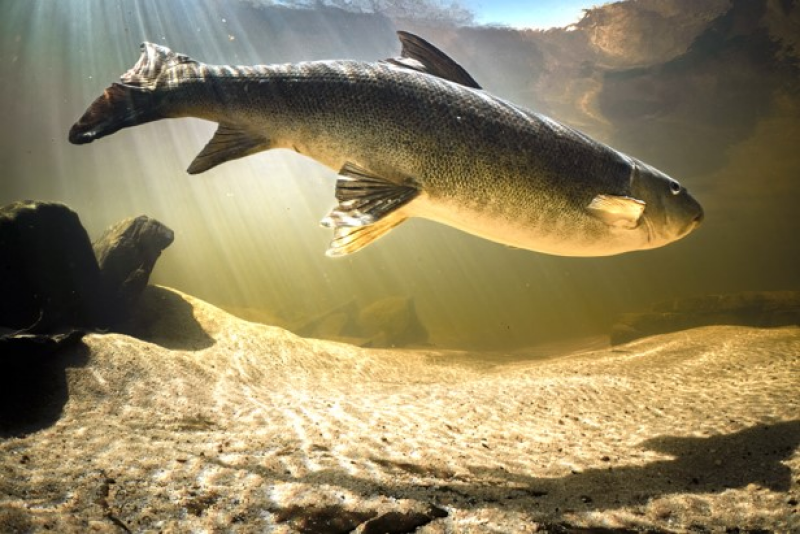
Clanwilliam sandfish, Labeo seeberi (EN)
The Saving Sandfish project, led by the Freshwater Research Centre (FRC), aims to prevent the extinction of the Endangered Clanwilliam sandfish (Labeo seeberi) in South Africa’s Olifants-Doring river system by boosting juvenile fish recruitment and restoring critical habitat. The approach involves rescuing thousands of young sandfish from high-risk habitats in the Biedouw River (a critical spawning tributary where invasive predatory fish and water abstraction prevent successful recruitment), relocating them into off-stream ‘sanctuary’ dams free of alien species, growing them until they reach a size that reduces predation risk, marking them with PIT tags, and then releasing them back into the wild once they are large enough to avoid predation by invasive fish like bass (Micropterus spp.). Progress to date includes the rescue of over 45 000 juveniles, the establishment of six sanctuary dams, and the reintroduction of over 5 000 ‘bass-proof’ fish into the wild. An ongoing PIT tag study shows that up to 20% of these fish return to the Biedouw River with the annual spawning migration in spring, translating into a an estimated nearly four-fold increase in the Biedouw spawning sandfish population. In 2024/5, a habitat restoration intervention was undertaken to restore 9 km of critical sandfish habitat in the upper Biedouw River through the removal of invasive fish and plants, and the construction of a barrier weir to prevent future reinvasion. By combining an urgent on-the-ground programme with longer-term habitat restoration, the project seeks to transition from emergency intervention to establishing self-sustaining wild sandfish populations.
Funders: National geographic Society, Species Survival Commission, Mohammed Bin Zayed Species Conservation Fund, IUCN Save our Species, Foundation Segre, European Union, Rufford Foundation, Ford Wildlife Foundation, Federation of South African Flyfishers, Mount Ceder, Bushmanskloof, Alu-Cab.
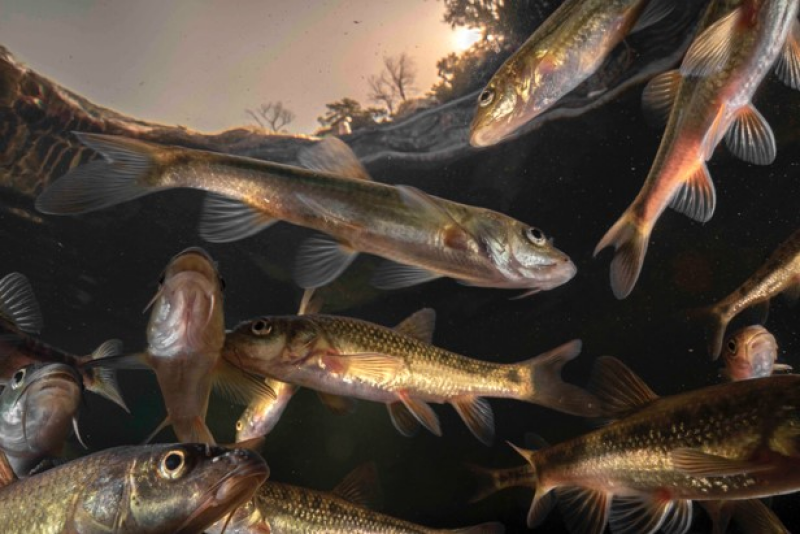
Tradouw redfin, Pseudobarbus burchelli (CR)
The Grootvadersbosch Conservancy is leading a conservation project for the Tradouw redfin (Pseudobarbus burchelli) in the Huis–Tradouw River system near Barrydale, Western Cape, aimed at securing the species’ survival through habitat restoration, community engagement, and improved water management. Key actions include restoring river flows, clearing invasive riparian vegetation, controlling alien fish threats, and promoting water-wise practices. The conservancy is working closely with the Barrydale community and local municipality to improve the water efficiency of the local water use system (reducing dependence on the river during dry spells) and building on earlier efforts that included retrofitting water release valves on the weir to maintain ecological flow. Invasive plant removal continues to improve both water quantity and quality, while stakeholder capacity is being strengthened through training, signage, and local employment. Awareness campaigns, open days, and workshops help residents understand the importance of the Huis River’s health and the plight of its unique species. All activities are integrated into a Species Action Plan developed with government partners to ensure long-term protection and recovery of this Critically Endangered fish. In addition, a translocation programme is under development to identify and establish new habitats to safeguard the redfin, including suitable upstream reaches and farm dams free of invasive species.
Funders: WWF Nedbank Green Trust, IUCN Save our Species¬, Species Survival Commission, Foundation Segre.
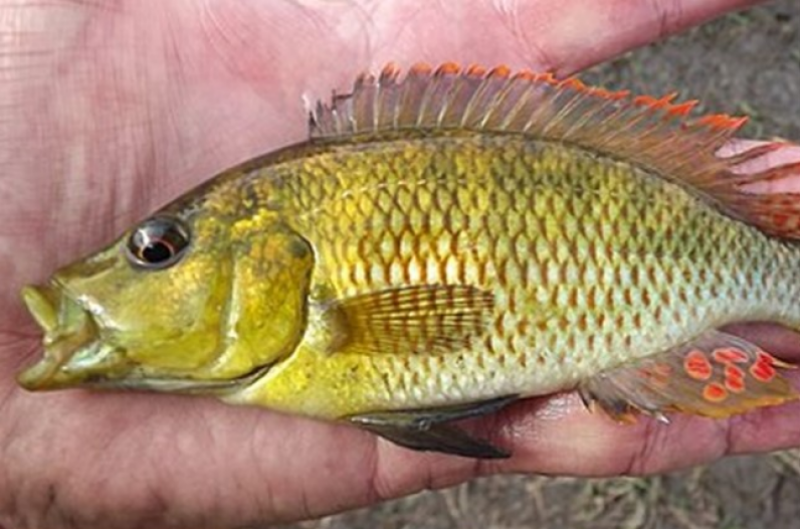
Orange-fringed largemouth bream, Chetia brevis (EN)
This project is led by SAIAB, in collaboration with the Mpumalanga Tourism and Parks Agency (MTPA), retired specialists, students and staff from Nelson Mandela University, and the Eswatini Department of Fisheries. All historical collection sites for the Orange-fringed largemouth bream (Chetia brevis) have been resurveyed, revealing a substantial decline in both population size and area of occurrence. The main threats are invasion by largemouth bass (Micropterus salmoides) in the lower Lomati River in South Africa, and pollution from gold mining in the upper river reaches in Eswatini. Based on these findings, the species has been reassessed under the IUCN Red List and uplisted to Critically Endangered (assessment under review).
To support recovery, farm dams within or near the Lomati catchment have been stocked with wild-caught and captive-bred individuals. To date, 23 dams have been stocked in Eswatini and South Africa (including dams within the Kruger National Park), with an estimated ~50% showing signs of success by 2025. Additional stocking has also been done in the upper river within the species’ historical range. The captive breeding programme has been highly successful, with >30 breeding events producing ~1 500 juveniles. However, based on the IUCN guidelines, stocked individuals (more than 30 000 fish (wild and captive-bred)) can only be considered part of the natural population once they persist within their natural distribution for at least three generations or ten years for species with short generation lengths, independent of human support. Active research for Chetia brevis is underway estimating generation length at 3-4 years.
Working with local farmers has enabled access to suitable dams and logistical support. In Eswatini, engagement with the Department of Fisheries aims to support community-based dam management to prevent over-harvesting, as these dams provide food resources. Concurrently, multiple Masters research projects are underway (2023–2027, Nelson Mandela University George Campus) to study the age, growth and fecundity of the species to inform a sound long-term conservation plan. The current project phase ends in 2025, but key activities – including additional stocking, monitoring and completion of biological research – will continue to 2027.
Funders: Mohammed Bin Zayed Species Conservation Fund.
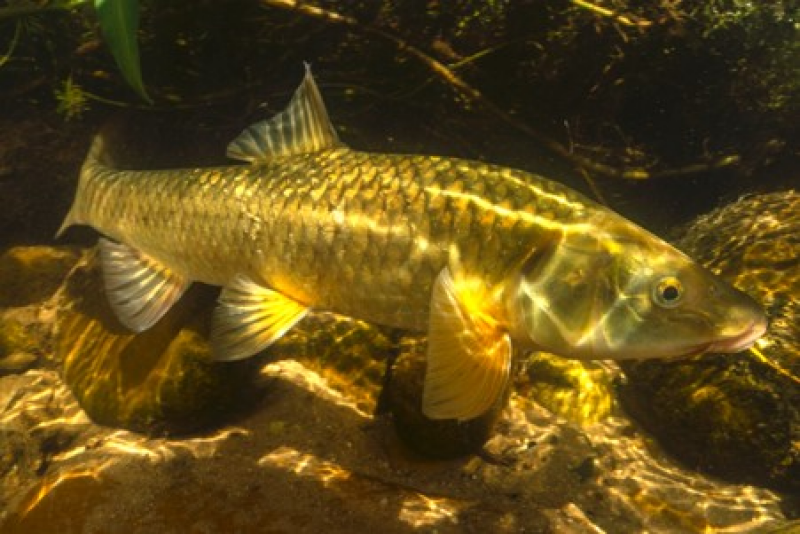
Berg-Breede witvis, Cheilobarbus capensis (EN)
The Bringing Back the Witvis project, led by the FRC, is working to re-establish the Endangered Witvis (Cheilobarbus capensis) – once abundant in the Berg River system of the Western Cape – by first establishing sanctuary populations in farm dams and then releasing them back into the river following efforts to improve the health of the river ecosystem by the Berg River Improvement Programme (BRIP) and others. The approach includes tagging and monitoring released fish to track survival, growth and dispersal, alongside outreach with landowners, fishers and schools to build support for the species’ recovery. Progress so far has seen six suitable nursery dams identified and stocked, surveys showing the river’s improved condition, and over 1 500 witvis introduced from the sanctuary dams back into the wild.
Funders: Table Mountain Fund, Boschendal Estate, Babylonstoren Estate, Ford Wildlife Foundation.
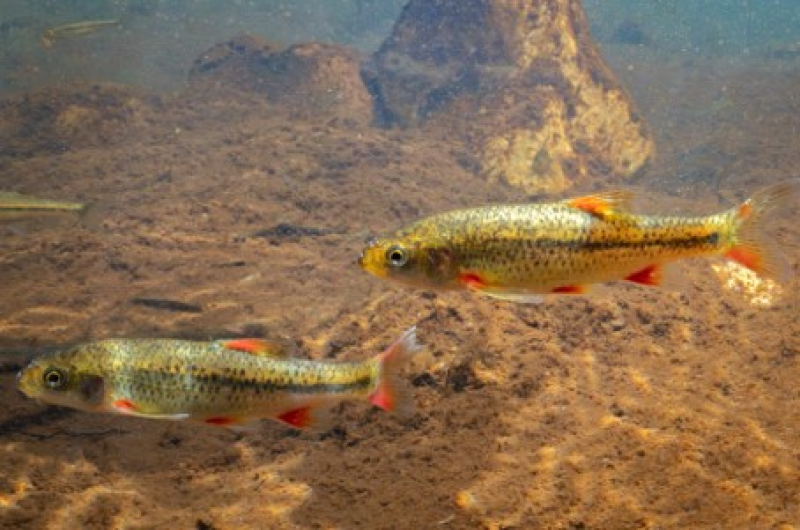
Doring River fiery redfin, Pseudobarbus sp. nov. doring (CR)
The Breekkrans River Restoration Project, led by the FRC, aims to restore 8 km of the pristine upper Breekkrans River in the Cederberg Mountains in order to expand the habitat of the Critically Endangered Doring River Fiery Redfin (Pseudobarbus sp. nov. doring) and four co-occurring endemic freshwater fish species from less than 2 km to ~10 km of safe, alien-fish-free river. The approach includes mechanically removing invasive spotted bass (Micropterus punctulatus), building a downstream barrier weir to prevent their reinvasion, and employing local community members in the removal and monitoring work. Progress so far includes the removal of over 841 spotted bass from the target reach, the construction of an alien fish barrier weir, and over 500 employment days for local community members.
Funders: TotalEnergies, Mountain Club South Africa, Ford Wildlife Foundation.
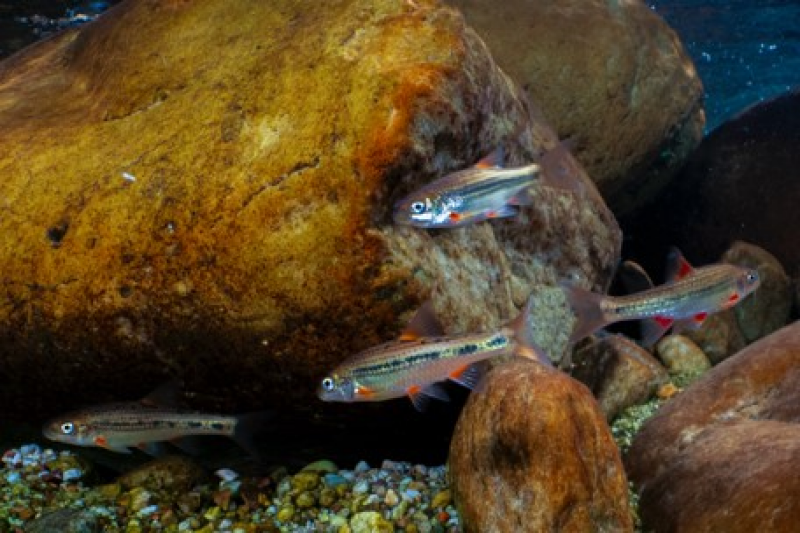
Verlorenvlei redfin, Pseudobarbus verloreni (EN)
The Krom Antonies Restoration Project, led by the FRC, focuses on the upper reaches of the Krom Antonies River (a tributary of the Verlorenvlei system) to protect the Endangered Verlorenvlei redfin (Pseudobarbus verloreni) by removing invasive predatory fish, such as largemouth bass (Micropterus nigricans) and banded tilapia (Tilapia sparrmanii), clearing thirsty alien plants, constructing a downstream alien-fish barrier weir, and engaging local landowners and communities in long-term management of a 5 km refuge for the Verlorenvlei redfin and two co-occurring endemic species. By removing key threats and securing the target river reach with a barrier, the project aims to enable the redfin population to recover in its last stronghold, as well as safeguard the habitat from potential future alien fish invasions. It also builds local capacity by training and employing community members in manual clearing of invasive species and co-developing management plans with landowners to ensure sustainability.
Funders: Mary Oppenheimer Daughters Foundation, Ford Wildlife Foundation.
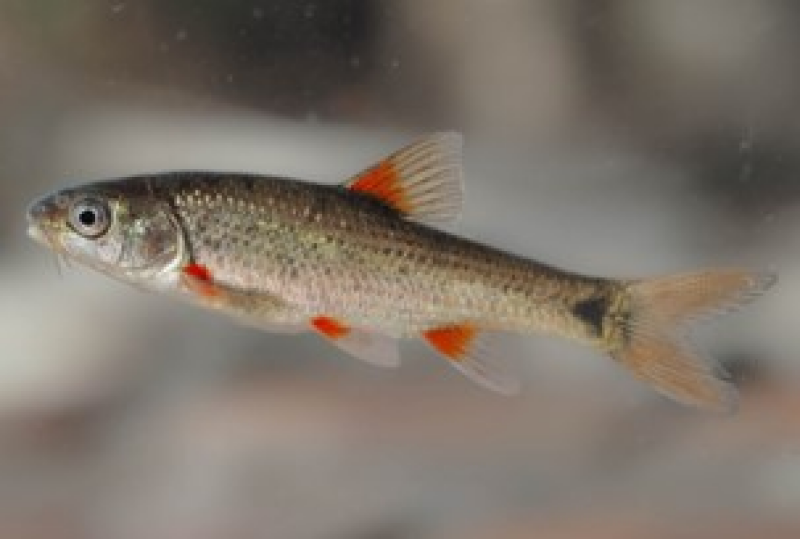
Agulhas redfin, Pseudobarbus agulhas (CR)
The project, led by the Nuwejaars Trust, and based in the upper Heuningnes/Kars River system on South Africa’s Agulhas Plain, aims to prevent the extinction of this extremely range-restricted, newly-described Agulhas redfin (Pseudobarbus agulhas) by mapping its populations, assessing critical threats (such as invasive fish, habitat loss and water abstraction), and developing a tailored conservation mitigation plan. Activities include extensive field surveys across 15 rivers in a catchment area of approximately 72 500 ha, stakeholder engagement (including landowners and schools with over 500 pupils reached), and data collection to feed into longer-term restoration actions. By gathering baseline data and raising awareness, the project is building the foundation for future habitat restoration and alien fish removal work that will aim to create safe sanctuary zones for the Agulhas redfin’s recovery. Key mitigation activities to date include: removal of alien invasive fish from the river system (581 and counting); translocation of over 400 redfins to off-stream dams to establish breeding populations for future reintroduction programmes; and an environmental impact assessment process underway for an alien fish barrier to safeguard the critical Agulhas redfin habitat.
Funders: Mohammed Bin Zayed Species Conservation Fund, IUCN Save our Species, Foundation Segre.
Next steps and the way forward
The development of a Fynbos Fish Conservation Action Plan is underway by the FRC and partners with funding from Re:wild. This project, focussed on the Western Cape Province, will fill gaps in threatened fish distributions, identify key threats and combine this with expert knowledge to identify priority recovery actions and investment for 10 of the most threatened freshwater fish species in the region over the next decade. The next important step will then be to scale up this approach to develop a national 10-year species recovery plan for threatened freshwater fishes in South Africa. This roadmap will be valuable for motivating for species recovery funds, guiding collaborations among organisations and focussing available resources on priority interventions with the greatest chance of success.
Recommended citation
Shelton, J., Cerrilla, C., Jordaan, M., Bills, R., Anderson, A., Brink, E., Raimondo, D.C., Chakona, A., Job, N., Van Der Colff, D., Monyeki, M.S., & Hendricks, S.E. 2026. Freshwater fish species recovery actions. National Biodiversity Assessment 2025. South African National Biodiversity Institute. http://nba.sanbi.org.za/.