
Freshwater ecosystems – rivers and inland wetlands – face a multitude of pressures, including pollution from numerous sources, infrastructure development, and changes in land use. Their ecological functioning is particularly sensitive to changes in hydrology and water quality. Habitat loss and fragmentation, climate change, pollution, and invasive species persist as key direct drivers of biodiversity loss and freshwater ecosystem degradation, and do not appear to be abating since NBA 2018. Addressing these pervasive pressures is an essential component of conservation and management of these vital ecosystems.
Hydrological modification
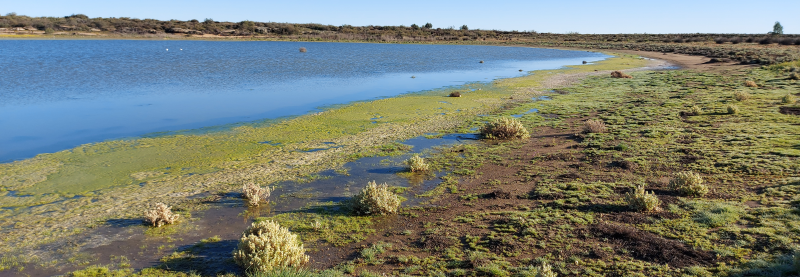
Inappropriate abstraction and damming severely alter natural flow regimes and seasonality, frequently leading to ecosystem type change, such as a change from seasonal to permanently inundated wetland or regular to intermittent flowing river. This is leads to loss in connectivity, impacting the dispersal of migratory species, and competing demands on water.
Habitat degradation and loss
The conversion and fragmentation of rivers and wetlands, such as by agriculture, urban development, and mining, can lead to loss of ecosystem structure, erosion and inappropriate fire regimes. Both the suppression of fires and planned burning practices for grazing result in changes to the natural fire regimes and subsequently the species composition of vegetation associated with rivers and inland wetlands in the landscape. Suppression of fire in the Fynbos biome, for example, has led to the densification of vegetation and decline in habitat.
Pollution
Water pollution is a major cause of the decline in freshwater species, particularly freshwater fishes. A combination of sediment, nutrient, chemical and thermal water pollution cumulatively impact the biodiversity and functioning of river and inland wetland ecosystem types and their associated freshwater species. Pollution (such as poorly or untreated wastewater effluent from industries and wastewater treatment works, mining waste, acid mine drainage and agricultural return flows) significantly increases nutrients, metals, pesticides and other toxic compound loads; and can also change the natural temperature ranges and turbulence of aquatic environments. Furthermore, pharmaceuticals and micro-plastics are emerging contaminants that act as endocrine disruptors, impacting the productivity of aquatic species, and are of grave concern. Water pollution has dire, long-lasting consequences for aquatic organisms and hence ecosystems function. The Olifants River, which flows through the Kruger National Park, is a prime example of a river at the receiving end of a heavily utilised and degraded landscape. The impact of pollutants entering the river system have led to the demise of Endangered species such as the Nile crocodile (Crocodylus niloticus), attributed to pansteatitis, as well as the mortality of several fish species in Loskop Dam. A decline in piscivorous bird species has also been observed, including Pel’s fishing owl (Scotopelia peli).
Climate change
Changes in climate, particularly rise in temperature and changes to the amount, intensity and season of precipitation, are expected to exacerbate the impacts of current pressures on inland aquatic ecosystems. Global temperatures have increased by almost 1 °C over the past 50 years and could increase another 1–2° C by 2050. Increasing temperature will impact the hydrological cycle, and consequently the functioning of rivers and inland wetlands. Significant reductions in amphibians’ range sizes are probable early impacts. In southern Africa, large lakes have shown increases in aquatic temperature, while the tropical cyclones that bring rain to the Maputaland Coastal Plain may move eastward, away from the African continent. Climate change is widely considered as a multiplier of other pressures on biodiversity, both exacerbating the effects of these pressures and altering the frequency, intensity and timing of events. Many of these shifts are predicted to benefit the survival of invasive species over native species and increase the outbreak potential and spread of disease. Considering that many freshwater species are range-restricted and that the fragmented state of ecosystems may prohibit range shift migrations, increasing the connectedness and size of the protected area network, including Ramsar sites, are key components of climate change adaptation strategies. In the inland aquatic realm, human responses to climate change are likely to further increase some pressures, for example, reduced rainfall due to climate change (exacerbated by biological invasions in catchment areas) drives an increase in water abstraction (for human settlements and agriculture), which compounds the pressure on the aquatic ecosystem and species.
Warming of as little as 1.5 °C poses a considerable threat to freshwater ecosystems and the many critical services these systems provide5, and 2 °C warming is highly likely to be exceeded in the middle of this century5,6. The winter rainfall region is at a higher risk of multi-year droughts, with the summer rainfall areas projected to experience similar risk should warming reach 1.5 °C or higher7.
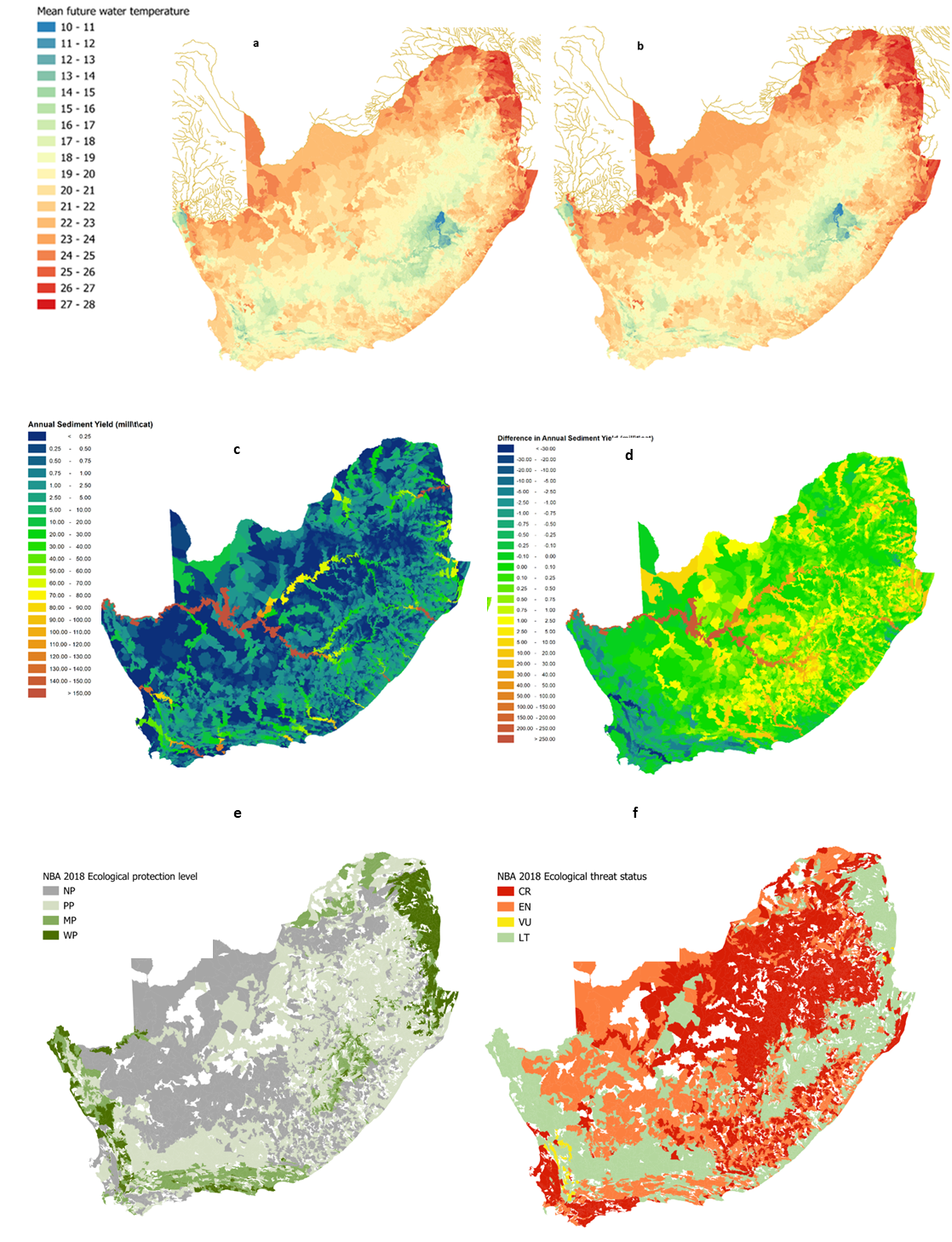
Impacts of climate change on water temperatures are projected to vary across South Africa by between 1 °C and 4 °C, with the highest increases in the semi-desert Kalahari. Areas of the already hot and dry Northern Cape are highlighted as being particularly imperilled by a situation of presently low protection level, high threat and climate-related pressures (Figure 1). The occurrence of certain types of land use within the surrounding catchment may raise water temperatures within rivers to around 0.1 °C higher than those driven by natural land cover. Notably, the Maputaland, coastal KwaZulu-Natal and Limpopo areas, where temperatures can rise by 0.2 - 0.3 °C, are highlighted as particularly vulnerable given the combination of low protection status, high ecosystem threat level, and some of the largest predicted shifts in temperature. Highs of 0.6 to 0.7+ above natural water temperatures may occur where large urban areas are located (Figure 1a, b)8. Temperature shifts have potentially highly impactful effects on species close to their thermal thresholds, highlighting an urgent need to define sentinel species for South African freshwaters9.
Under climate change and current trends in land use, sediment accumulation is likely to shift. Shifts in climate may alter streamflows, affecting nutrient flows, geomorphic integrity and the hydrology of freshwater systems. Species and ecosystems dependent on predictable stream and nutrient flows may be put under increased pressure as a result of shifts in sedimentation. Projected climate change may result in higher sediment yields than at present conditions primarily in the centre and east of the country, and lower sediment yields along the west and south coastal areas, especially in wetter than average years (Figure 1c, d)8.
South Africa’s freshwater ecosystems are largely inadequately protected, and the NBA 2025 has identified those ecosystems that are both highly threatened and poorly protected. Many of these areas also overlap with areas where streamflow, water temperatures and sediment accumulation patterns are likely to undergo extensive change under near-future climate scenarios8. Knowledge of areas most affected by climate-related changes and that affect ecosystem functioning and vulnerable species (Figure 1e, f), is crucial to ensure effective and timeous management response.
Biological invasions
Biological invasions are a major pressure on the biodiversity and ecosystem functioning of all realms. A national report is released every three years – providing a comprehensive assessment on the Status of biological invasions and their management in South Africa. The report details alien species introduction pathways, their distribution and abundance, their impacts and the various interventions that have been put in place.
Alien invasive species cause substantial changes to ecosystem structure and function and negatively impact aquatic biota. Rivers and inland wetlands are the most heavily invaded ecosystems globally, largely due to their inherent connectivity and the intensity of anthropogenic activities. Of the 191 listed alien species in the freshwater realm, 65 are invasive. Of these invasive species, 27 severely impact biodiversity (5 fish species and 15 plant species). Nationally, 81% of freshwater fishes of conservation concern are impacted by invasive alien fishes. Many of these native species are endemic to the mountains of the Western Cape. The invasive species (e.g. bass (Micropterus spp.) impact on native species mainly through predation of juveniles and outcompeting adults for resources. This reduces population sizes and has caused population extirpation of many native species. In some cases, invasive species have hybridised with native species e.g. invasive Nile tilapia (Oreochromis niloticus) and indigenous Mozambique tilapia (Oreochromis mossambicus). Invasive plants in rivers and wetlands threaten ecosystem integrity, alter fire regimes and change hydrological processes due to their high water consumption.
Technical documentation
Related publications and supporting information
Coming soon
Recommended citation
Job, N., Broom, C., & Kotze, D. 2026. Pressures on freshwater ecosystems: Freshwater (inland aquatic) realm. National Biodiversity Assessment 2025. South African National Biodiversity Institute. http://nba.sanbi.org.za/.
References
Notes
Wastewater is defined as “a combination of one or more of: domestic effluent consisting of blackwater (excreta, urine & faecal sludge) & greywater (kitchen & bathing wastewater); water from commercial establishments and institutions, including hospitals; industrial effluent, stormwater & other urban run-off; agricultural, horticultural & aquaculture effluent, either dissolved or as suspended matter (UN-Water 2015).”↩︎